

IMES community profile: Jessica DeVilla
December 18, 2025
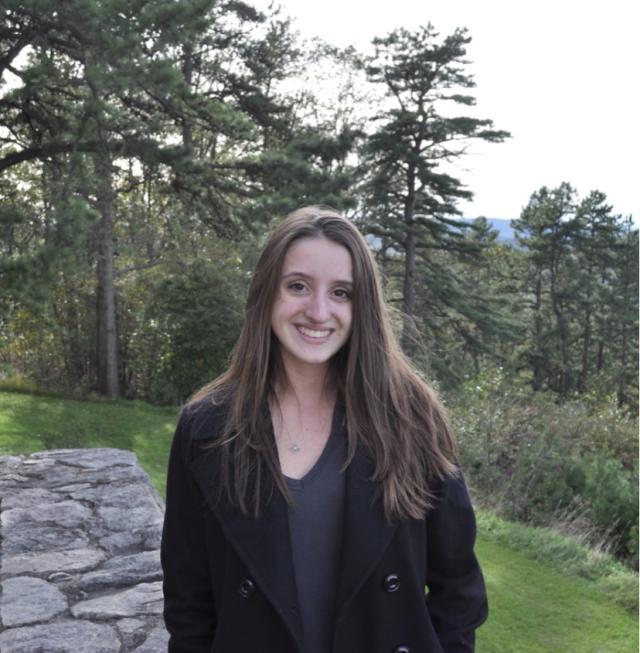
Jessica DeVilla, HST MEMP PhD student in bioengineering, is working in two labs, one at Dana-Farber, one at Harvard, and she hopes her research into the efficacy of adoptive cellular therapies (ACT) will improve the treatment of cancer.
Mindy Blodgett | IMES
Jessia Devilla is a Harvard-MIT Health Sciences and Technology (HST) Medical Engineering and Medical Physics (MEMP) student who studied bioengineering at Harvard, with a secondary in global health and health policy. Originally from Long Island, NY—upon graduation, she worked for a start-up in North Carolina, focusing on miniaturized patient-derived organoid models for cancer, before returning to Boston to attend HST. Read on to learn more about her background and her plans for the future.
Why did you choose the HST program?
I chose HST because it offers unparalleled access to the greater Boston biomedical ecosystem. Being able to rotate in and collaborate with labs at Harvard, MIT, and the major hospitals is pretty special. I was also excited about the chance to take pre-clinical coursework alongside medical students and learn how clinicians think about disease and decision-making. It’s rare to be in a program that genuinely cares about helping students understand what it means to be part of clinical care while still building a strong foundation in engineering.
What do you wish you’d known, before you became a graduate student, and before you joined HST?
I wish I’d known how nonlinear research can be. Graduate school is as much about exploration as it is about expertise, and it’s okay to change direction as you learn more.
Your research focuses on the expansion of neoantigen specific T cells using antigen-presenting cell mimetic scaffolds, to aid in the efficacy of adoptive cellular therapies (ACT) for the treatment of cancer. Can you tell us more about this research, and why it could improve cancer treatments?
Adoptive T cell therapies work by growing and often engineering a patient’s own T cells so they can better recognize and eliminate tumor cells. One of the biggest hurdles is reliably expanding large numbers of potent, tumor-specific T cells, particularly those that target patient-specific neoantigens, or proteins created by mutations in cancer cells. My research focuses on expanding these cells using antigen-presenting cell mimetic scaffolds, novel biomaterials designed to better replicate how T cells are naturally activated in the body. By tuning both the biochemical and mechanical cues T cells experience during expansion, we aim to generate larger numbers of cells with features associated with improved clinical outcomes. Ultimately, this approach could make highly personalized adoptive T cell therapies more feasible, consistent, and effective for patients.
Which lab are you a part of, and why did you choose this particular lab?
I’m co-advised by Cathy Wu at Dana-Farber and Dave Mooney at Harvard Bioengineering. Working in both labs allows me to blend my interests in engineering and immunology while working with clinicians on highly translatable problems. I feel very lucky to work closely with people across both groups and to learn from their different perspectives and areas of expertise, and I’m excited by both the science and the community I get to be part of every day.
What are you hoping to accomplish with your career?
Long-term, broadly I hope to lead work that translates biological insights into real therapeutic solutions. I’m interested in bridging academia, biotech, and the clinic, whether that means leading a research program, launching a company, or developing platforms that enable more accessible and effective cancer therapies.
What do you like to do in your spare time?
Outside of lab (and sometimes inside), I love to dance! I grew up dancing competitively in styles like ballet, tap, contemporary, and hip-hop, and I’m starting to re-explore many of these styles. I’m currently involved in a performance group in the Boston area, and I like to take classes in different styles when I can. I also enjoy practicing yoga and going on bike rides around the city.
What is on your bucket list?
A close friend of mine recently gave me their old guitar and learning how to play it is high on my bucket list!
What is the most unusual, or fun job you’ve ever had?
Not necessarily a job, but as an undergrad I was co-president of Harvard Ventures, a student-led organization focused on building resources for those interested in entrepreneurship and venture capital. Near the start of the COVID-19 lockdown, we decided it would be fun to start a podcast as a resource for our community where we’d interview thought leaders in the entrepreneurship space. Our first guest ended up being Mark Cuban and the podcast really took off from there! I had a lot of fun chatting with our guests about their experiences in startups, venture capital, and building companies across many different industries, including biotech.
Can you tell us more about the area where you grew up, what makes it distinctive?
I’m from Long Island, which has this mix of beaches, suburbs, and easy access to New York City. I grew up with lots of opportunities to get involved in extracurriculars and the local culture. I especially loved going into the city to see Broadway shows, and as a kid, I spent a lot of time singing, playing the violin, and dancing. What made growing up on Long Island special for me was having schools that really connected students to research opportunities. As a high schooler, I got to work in a lab at Stony Brook University which sparked my interest in science and made research feel both exciting and doable.
What do you hope to be doing in 10 years?
At this point, I’m open to a few different career paths, but broadly, I hope to be working on interesting scientific problems that have real-world impact. I see myself working in biotech or translational research, helping move innovative cell therapy platforms from the lab toward clinical use.