MIT linQ announces the 2025 cohort of Catalyst Fellows November 8, 2024 Biomedical technology innovation program recruits diverse class to discover new project opportunities Rallying around graduate student parents November 1, 2024 From helping new parents to coordinating play dates and sharing information, MIT students who are parents are there for one another. A new framework to efficiently screen drugs October 22, 2024 Novel method to scale phenotypic drug screening drastically reduces the number of input samples, costs, and labor required to execute a screen. Three questions for Thomas Heldt: Leveraging insights to enable clinical outcomes October 17, 2024 Thomas Heldt, associate director of IMES, and a core faculty member, describes the impact of his research on clinical outcomes. Jane-Jane Chen: A model scientist who inspires the next generation October 10, 2024 An IMES research scientist, and internationally recognized authority in the field of blood cell development, reflects on 45 years at MIT. Laura Lewis and Jing Kong receive postdoctoral mentoring award October 7, 2024 Advisors, including one at IMES< commended for providing exceptional individualized mentoring for postdocs. IMES is seeking a tenure-track junior faculty candidate in health sciences September 30, 2024 IMES is an inclusive community of students, administrative staff, research staff, and faculty who research, work, educate, and learn, at the convergence of engineering, science, and medicine to transform human health for all. A two-dose schedule could make HIV vaccines more effective September 26, 2024 MIT researchers, including at IMES, find that the first dose primes the immune system, helping it to generate a strong response to the second dose, a week later. Enhancing LLM collaboration for smarter, more efficient solutions September 18, 2024 “Co-LLM” algorithm helps a general-purpose AI model collaborate with an expert large language model by combining the best parts of both answers, leading to more factual responses. A new way to reprogram immune cells and direct them toward anti-tumor immunity September 18, 2024 The discovery of MIT scientists, including from IMES, yields a potent immune response, which could be used to develop a potential tumor vaccine. Pagination First page « First Previous page Previous … Page 11 Page 12 Page 13 Current page 14 Page 15 Page 16 Page 17 … Next page Next Last page Last » Side navigation News Events Distinguished Speaker Series: Founder’s Lecture Distinguished Speaker Series: Richter Lecture
MIT linQ announces the 2025 cohort of Catalyst Fellows November 8, 2024 Biomedical technology innovation program recruits diverse class to discover new project opportunities
Rallying around graduate student parents November 1, 2024 From helping new parents to coordinating play dates and sharing information, MIT students who are parents are there for one another.
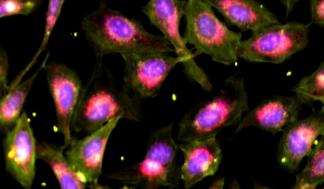
A new framework to efficiently screen drugs October 22, 2024 Novel method to scale phenotypic drug screening drastically reduces the number of input samples, costs, and labor required to execute a screen.
Three questions for Thomas Heldt: Leveraging insights to enable clinical outcomes October 17, 2024 Thomas Heldt, associate director of IMES, and a core faculty member, describes the impact of his research on clinical outcomes.
Jane-Jane Chen: A model scientist who inspires the next generation October 10, 2024 An IMES research scientist, and internationally recognized authority in the field of blood cell development, reflects on 45 years at MIT.
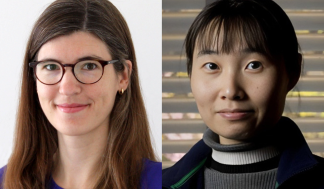
Laura Lewis and Jing Kong receive postdoctoral mentoring award October 7, 2024 Advisors, including one at IMES< commended for providing exceptional individualized mentoring for postdocs.
IMES is seeking a tenure-track junior faculty candidate in health sciences September 30, 2024 IMES is an inclusive community of students, administrative staff, research staff, and faculty who research, work, educate, and learn, at the convergence of engineering, science, and medicine to transform human health for all.
A two-dose schedule could make HIV vaccines more effective September 26, 2024 MIT researchers, including at IMES, find that the first dose primes the immune system, helping it to generate a strong response to the second dose, a week later.
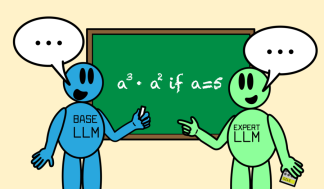
Enhancing LLM collaboration for smarter, more efficient solutions September 18, 2024 “Co-LLM” algorithm helps a general-purpose AI model collaborate with an expert large language model by combining the best parts of both answers, leading to more factual responses.
A new way to reprogram immune cells and direct them toward anti-tumor immunity September 18, 2024 The discovery of MIT scientists, including from IMES, yields a potent immune response, which could be used to develop a potential tumor vaccine.